Wildlife on Hutchinson Island, like most places in Florida is spectacular. No matter what your passion is when it comes to wildlife, you can find it here.
The perfect balance of the Atlantic Ocean and the Indian River estuary create the ideal habitat for more than 2,200 marine and wildlife species (35 of these species listed as threatened or endangered) that depend on it's sandy beaches, sea grasses, coral reefs, mangroves, and warm temperatures. Manatees, dolphins, sea turtles,
birds and alligators are among the favorites for both tourists and Floridians, alike.
Florida
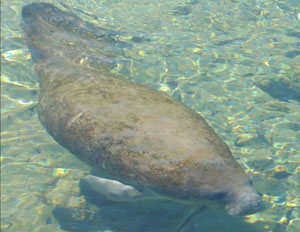
Manatee swimming in the Indian River Lagoon.
Photo: Indian River Lagoon Boat Tours
Manatee - Indian
River Lagoon
Photo: Indian River Lagoon Boat Tours
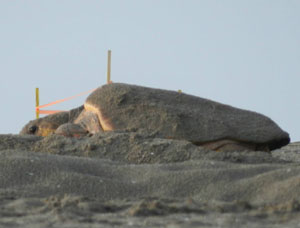
Sea Turtle nesting
on Hutchinson Island FL
Dolphin playing in
the Indian River Lagoon
Photo: Indian River Lagoon Boat Tours
Atlantic Right Whales
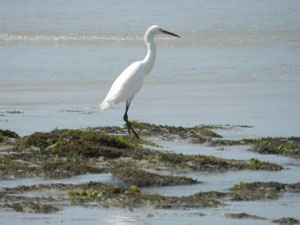
Snowy Egret hunting a meal - Hutchinson Island
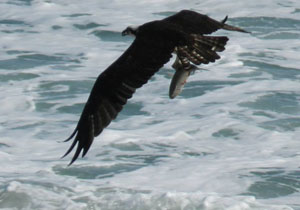
Osprey taking off with his fresh catch just
offshore of Hutchinson Island Florida
Manatees
The endangered Florida West Indian manatee, also called sea cow, are gentle and slow-moving. Most of their time is spent eating, resting and in travel. Manatees have no natural enemies, and it is believed they can live 60 years or more. Unfortunately, many manatee mortalities are human-related occurring from collisions with watercraft. There are approximately 3,000 West Indian manatees left in the United States.
Manatees are found abundantly on the east coast in Florida’s Intracoastal Waterway and
can be sighted just offshore of
Hutchinson Island in our coastal waters
and in the Indian River Lagoon Estuary.
In the coastal waters, they travel close
to shore so keep your eyes peeled! In
the winter months, just before a cold
snap, you'll see manatee traveling south
in search of warmer waters.
The Indian River Lagoon, which stretches from Brevard County to northern Martin County, is known to be important to manatees for a variety of reasons, including for feeding and traveling. During the winter months, hundreds of manatees aggregate near industrial warm-water discharges on the Indian River.
The Manatee Observation and Education Center is a waterfront wildlife observation and nature education center located on Florida‘s east coast in downtown Fort Pierce. The Center lies just west of the Atlantic ocean and overlooks the nationally recognized Indian River Lagoon, a saltwater estuary and Moore‘s Creek, a freshwater creek and historical resting spot for the Florida manatee.
Sea
Turtles
Hutchinson island is witness to many newborn babies including endangered sea turtles. Five species of sea turtles are found swimming in Florida's waters and nesting on Hutchinson Island beaches
including Green Sea Turtles, Loggerhead
Sea Turtles, Ridley's Kemp Sea Turtles,
Hawksbill Sea Turtles, and Leatherback
Sea Turtles. Annually, sea turtles annually make between 40,000 and 84,000 nests along the Florida coast. The nests are monitored daily during the 109-day sea turtle nesting season (May 15 to August 31). Researchers record nests and nesting attempts by species, nest location, and date. During nesting season the nests are marked with wooden stakes and orange tape with the pertinent information.
To
learn more on the best ways to see a
nesting turtle without disturbing her,
the do's and don'ts and Florida laws
that protect Sea Turtles and their
nests, the species of turtles that nest
on Hutchinson Island and authorized Sea
Turtle Conservation groups that will
take you out to witness nesting Sea
Turtles, visit our very informative
Hutchinson Island Sea Turtle page.
Dolphins can be spotted all around
Hutchinson Island throughout the year.
Many live their entire lives out in the
Indian River Lagoon. If you spend
anytime on the water of the Indian River
Lagoon chances are you'll see them. Rent
a Kayak and you might have the thrill of
a few coming up and greeting you as you
kayak through the waters of the Indian
River Lagoon. Look out in the waters of
the Atlantic while you're sitting on
your balcony enjoying a tropical
beverage and or relaxing on the beach
and chances are you will see them
traveling just a few hundred feet from
shore in search for their next meal. If
the ocean is bringing in some nice
waves, look in the waves as often times
you'll see them surfing the waves.
There
are many
Dolphin Boat Tours or
Dolphin
Watch Boat Trips that you can take
advantage of as our local captains will
give you a tour of the Indian River
Lagoon. Great photo opportunities for
dolphin, manatee and our beautiful
Florida birds. Visit our
Hutchinson Island Boat Tours for
information on how you can take a
Dolphin spotting boat trip and enjoy
these loveable creatures in their
natural habitat.
From
November to March, whales migrate down
the Atlantic coast of Florida. During
that time, you may have a special
opportunity to spot them just off shore.
Look for the blow. Migrating Whales include Humpback
Whales, Right whales, Fin Whales and Sperm Whales.
Right Whales
The North Atlantic Right Whale, is one of the most endangered large whales in the world. Only 300 right whales remain. These whales are commonly found off the East Coast of the United States and Canada. Right whales had been hunted to near extinction until hunting was finally banned in 1935. Although whaling is illegal, 30% of the mortalities are due to collision with large vessels or entanglement in fishing nets.
From December through March, pregnant females migrate from their northern feeding grounds to the warmer waters of Georgia and Florida to give birth to their young.
Right whales are often visible from the beach and many citizens along Florida’s eastern coast participate in a Right Whale sighting program to help relay whale locations to mariners. According to Florida Fish and Wildlife Conservation Commission , when a right whale is sighted the information is reported to the Marine Resources Council sighting hotline (1-888-97-WHALE or 1-888-404-FWCC), where the information is then incorporated into the extensive communication network that informs mariners of right whale locations. Other species of whales are also found in Florida coastal waters, so it is important to be able to distinguish a right whale from other animals when reporting a sighting.
Right whales lack a dorsal fin; therefore, they have a large, flat back. They are dark gray or black and have "bumps" called callosities, on their head. The callosities appear white due to the presence of cyamids, or whale lice, that often congregate on the callosities.
When right whales breathe they produce a V-shaped blow that is often as high as 15 feet and is visible from a great distance. Measuring up to 55 feet, an adult right whale can weigh 50 tons, and a newborn calf can measure 15 feet at birth and weigh 2,000 pounds.
Thanks to its diversity of habitats,
tropical climates, and geographical
location
over 500 species either call Florida their permanent home or
use Florida's vast wilderness during their migration routes,
making Florida a birder's paradise. Whether your a die-hard
bird watcher or new to the birding community, the Florida
Wildlife Conservation Commission has created The Great
Florida Birding Trail allowing everyone the opportunity to
experience all the wildlife Florida has to offer. This
2000-mile (489 sites) self-guided highway trail is designed
to conserve and enhance Florida's bird habitat by promoting
bird watching activities and bird education. Of course
Hutchinson Island is included on the Great Florida Birding
Trail. Please feel free to visit
The Great Florida Birding Trail for additional
information and locations.
While enjoying your time on the beaches
of Hutchinson you'll most likely encounter pelicans,
the great blue heron, ospreys, egrets, royal terns, and an
American White Ibis, just to name a few.
When you visit Hutchinson Island,
Florida, be sure to check the
Florida Wildlife Calendar. This calendar is an excellent
resource on Florida's wildlife with a plethora of
information as to where and when to look for various species
including mating and nesting locations and migration dates
and routes. Also, be sure to check out the
Places to Visit on Hutchinson Island
to take advantage of the
local
eco tours, turtle walks and beautiful state parks.